



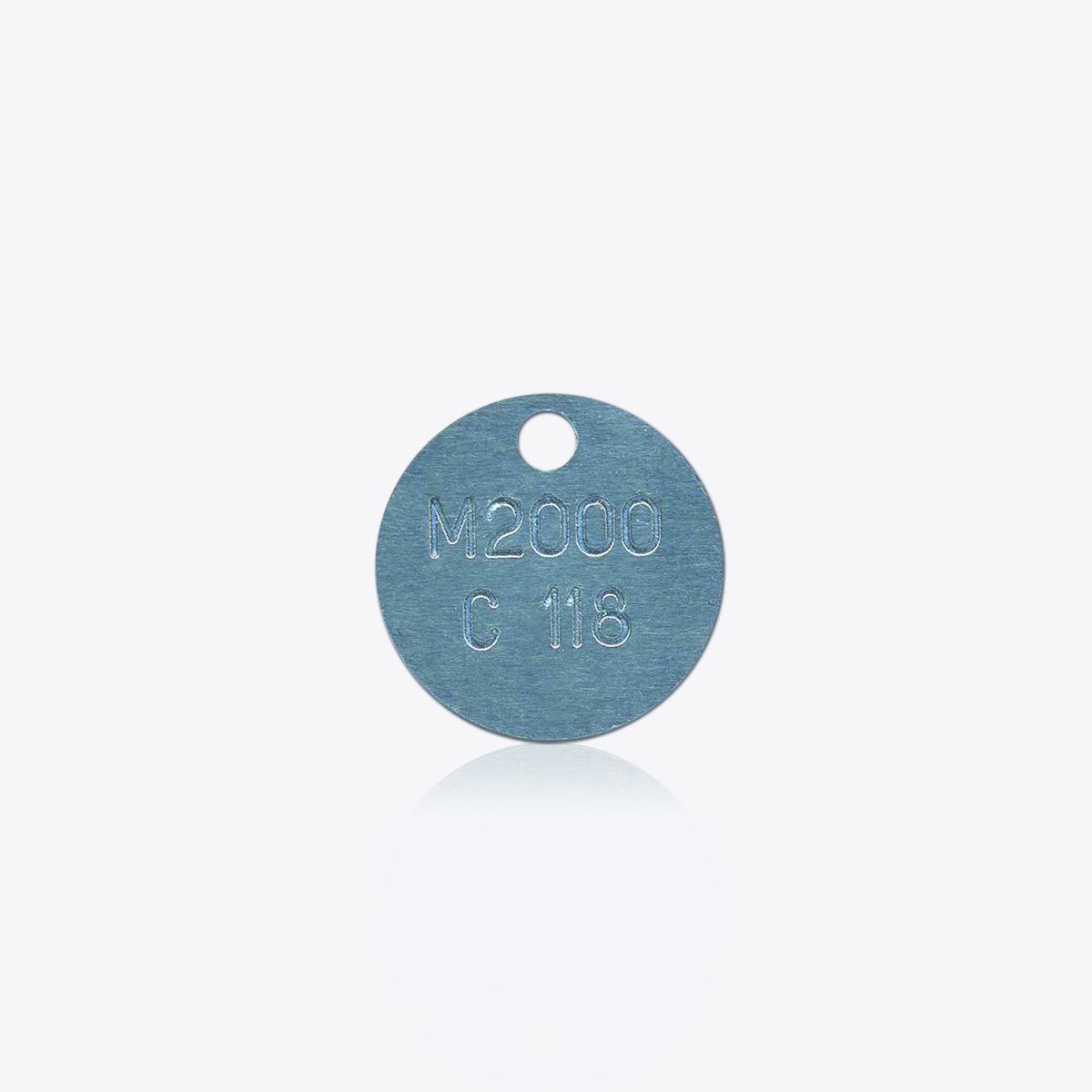
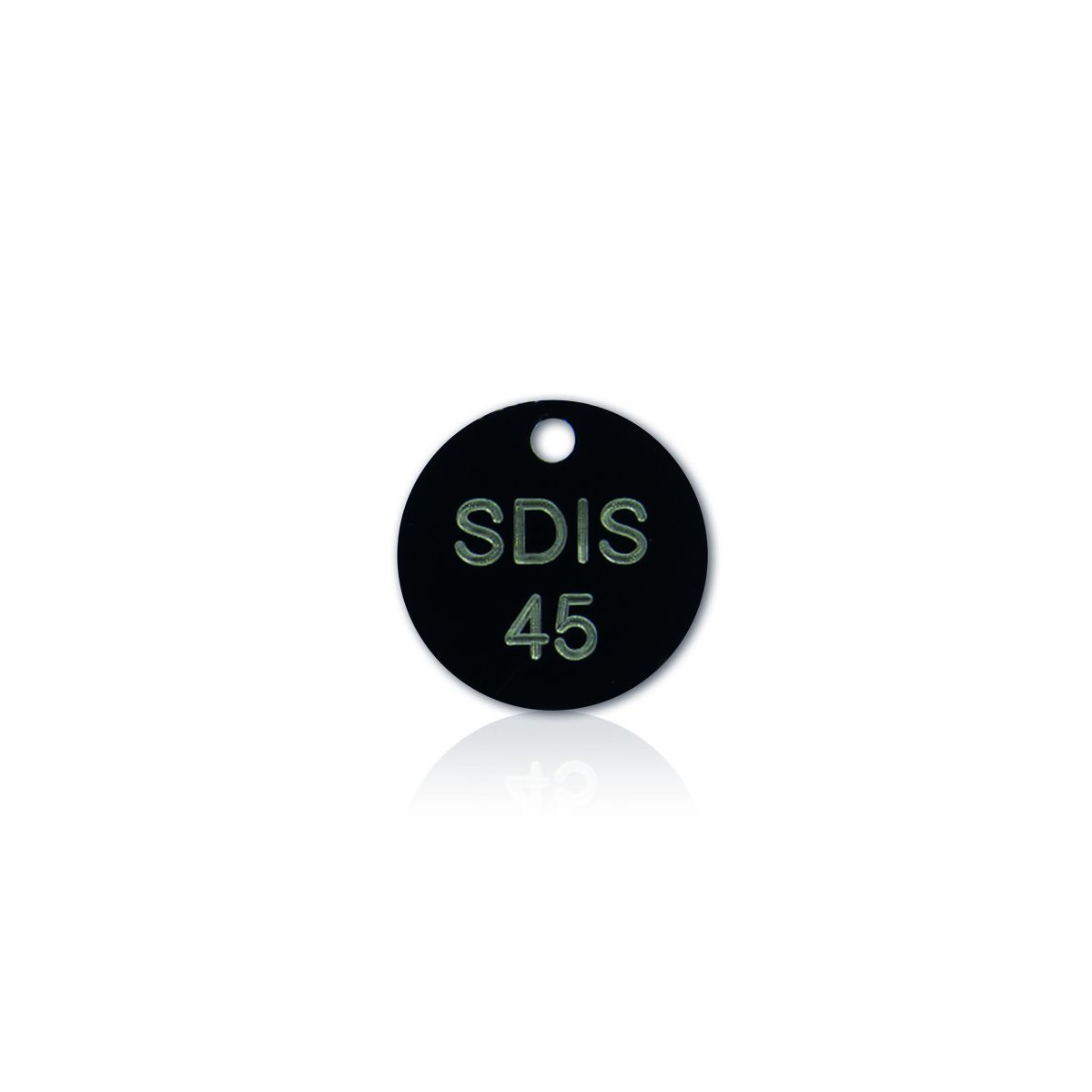
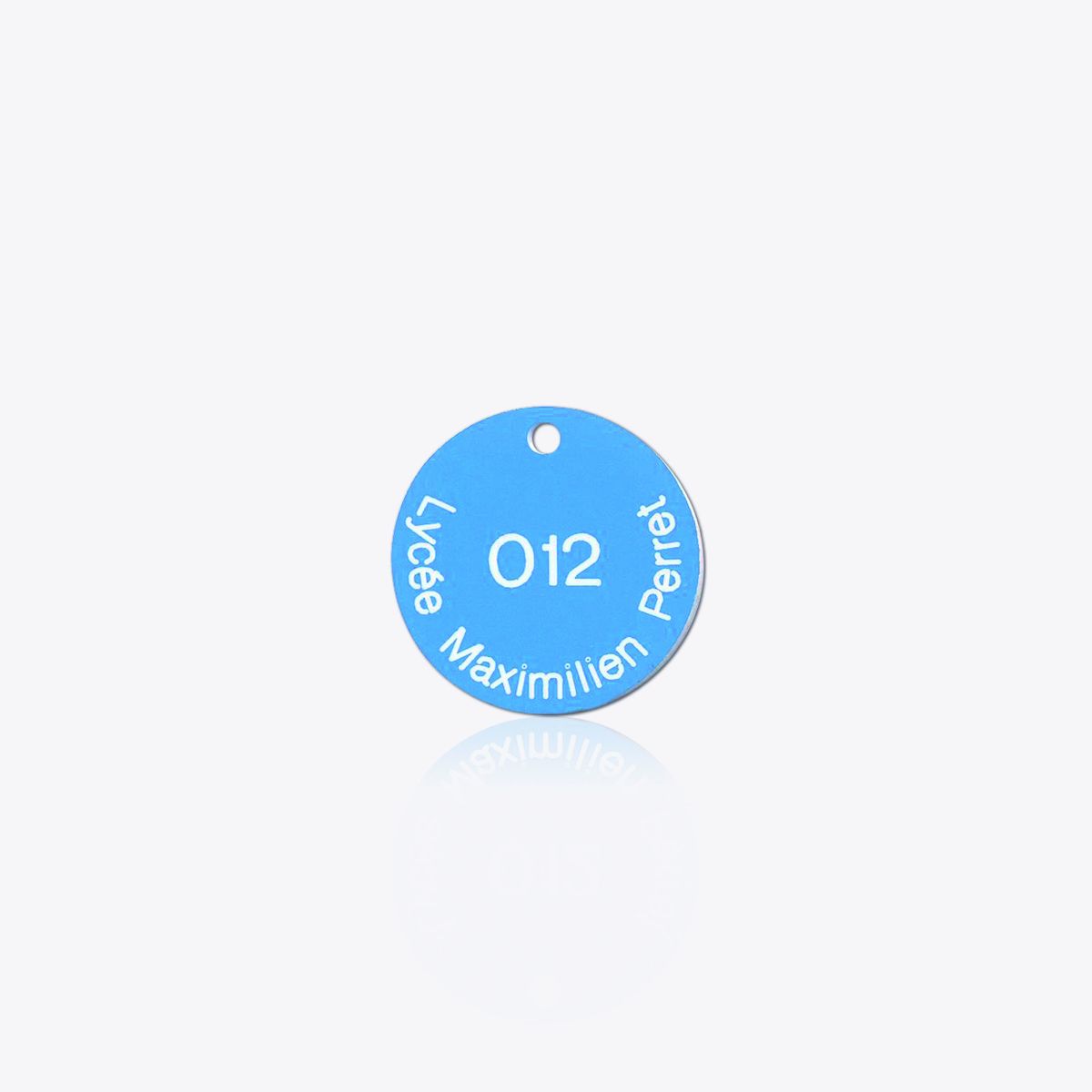
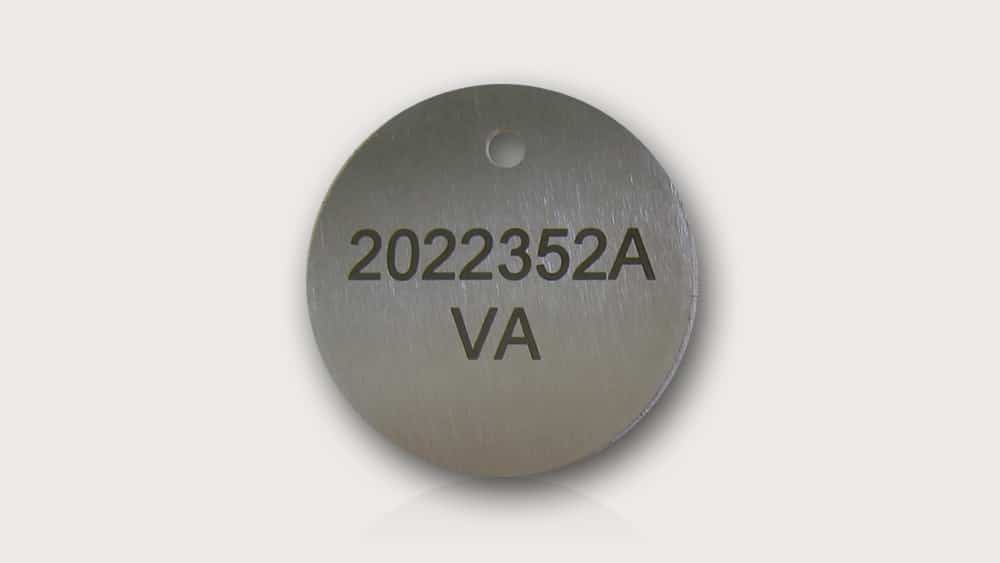
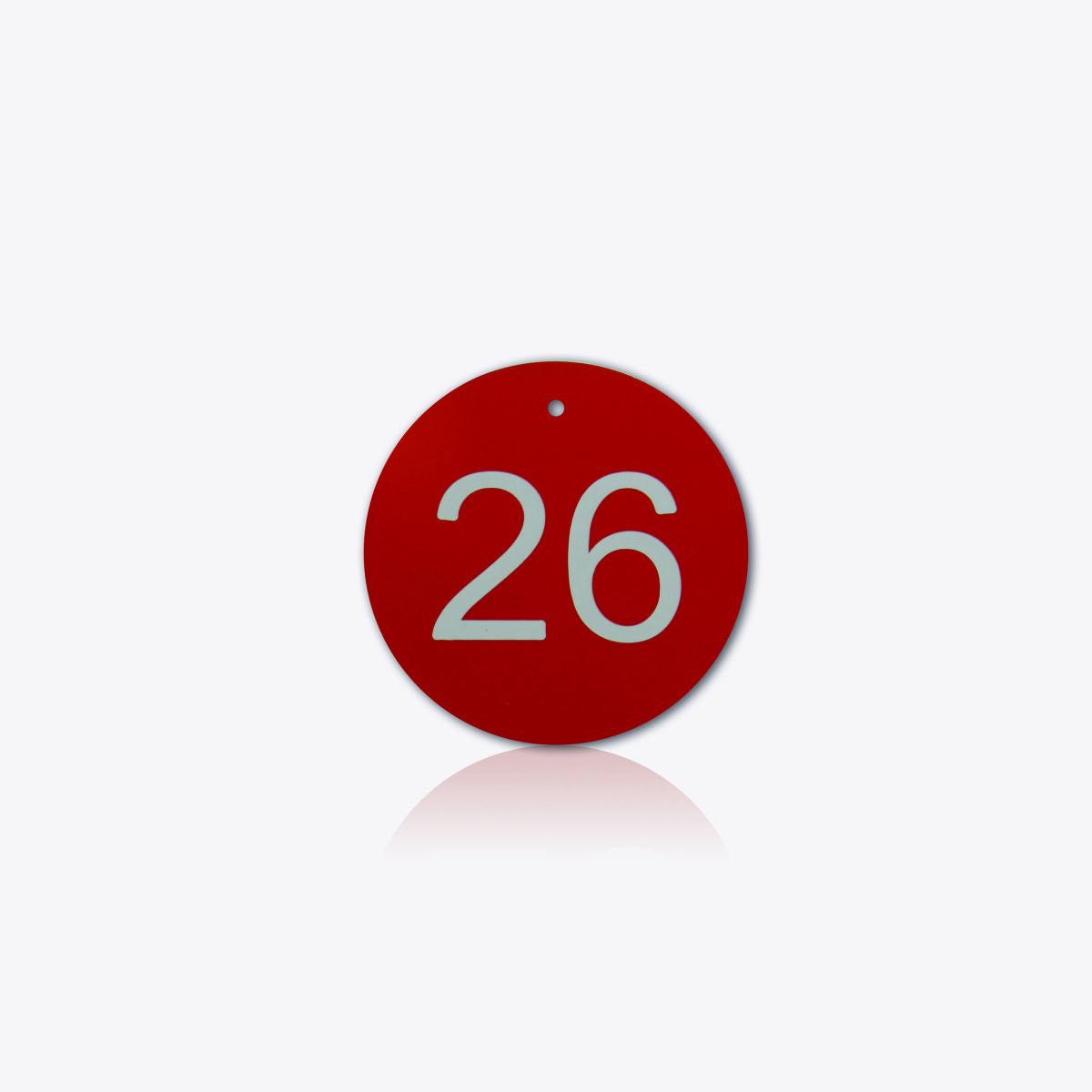
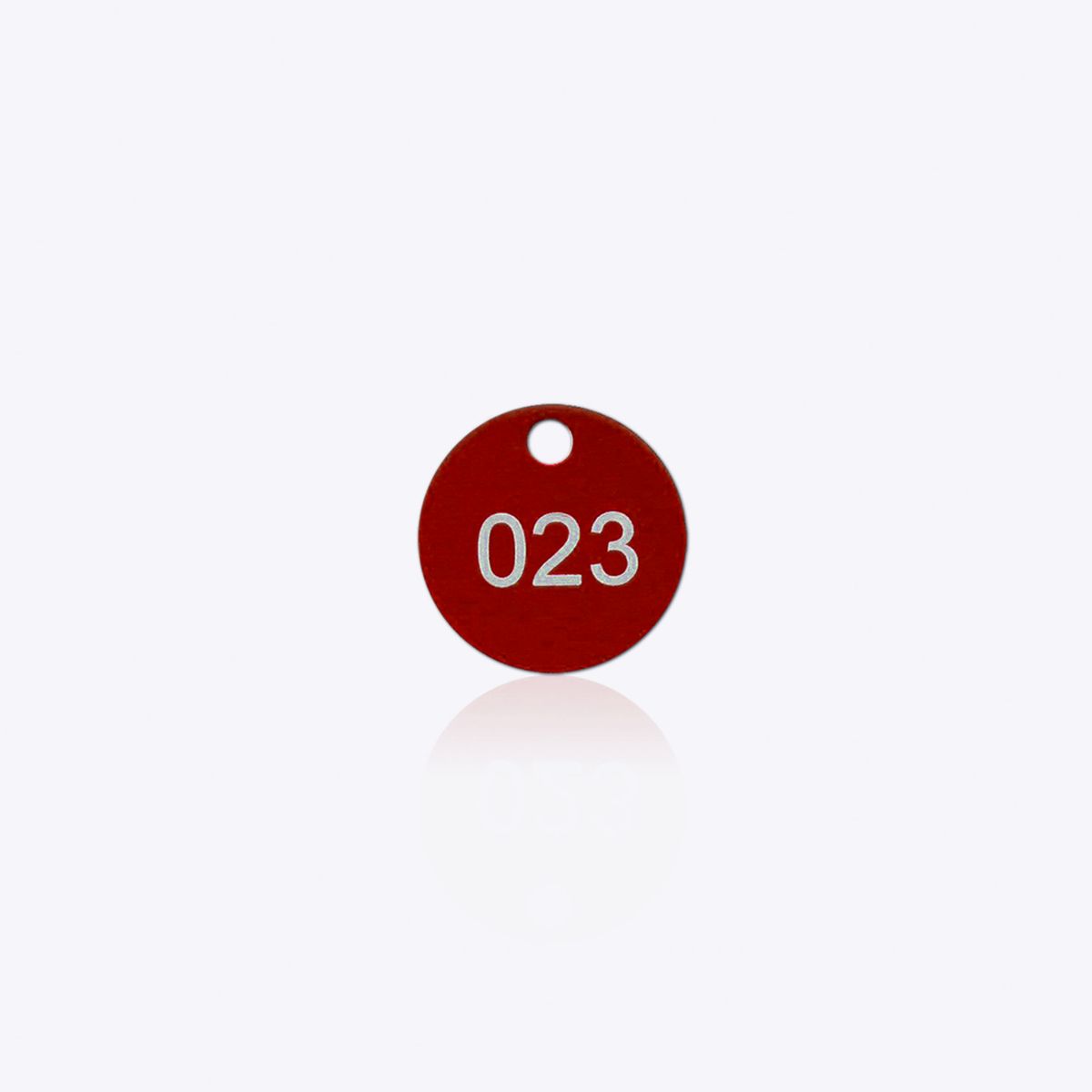
Technical comparison of engraving processes for traceability tokens
This table cross-references physical constraints with the capabilities of our 3 technologies that we use in our production processes.
| Evaluation criteria | Laser Annealing | Mechanical Engraving (Milling Cutter) | Chemical Etching |
|---|---|---|---|
| Physical Principle | Thermal surface oxidation (no material removal). | Machining by chip removal (carbide cutter). | Selective acid attack (isotropic material removal). |
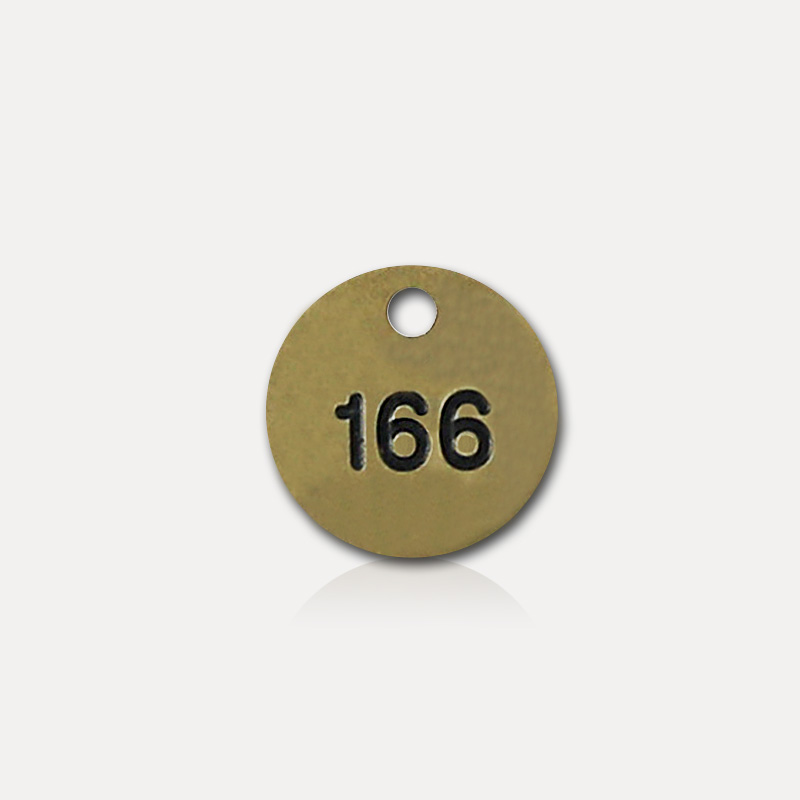
| Compatible Materials | 316L stainless steel / Titanium (exclusively). | All metals (Aluminum, Brass, Stainless Steel, Plastics). | 316L stainless steel, brass, bronze. |
| Chemical Resistance |
Moderate Alteration is possible if there is contact with strong acids (nitric/hydrofluoric) or subsequent passivation. |
Excellent (Intrinsic) Unalterable as long as the substrate holds up. |
Excellent (Intrinsic) Unalterable as long as the substrate holds up. |
| Abrasion Resistance |
Low to Medium Superficial marking (< 10µm). Gradual disappearance under constant friction. |
Élevée Deep marking (0.2 to 0.3mm). Legibility maintained even after surface wear. |
Élevée Deep marking (0.1 to 0.2mm). Readability maintained. |
| Surface Condition (Ra) |
Smooth (Ra unchanged) No retention areas. Compliant for food contact/sterile. |
Rough (Striations) Grooved engraving background. Critical retention zone (bacteriological risk). |
Smooth (Flat bottom) Flat engraving base. Low retention area and easy to clean. |
| Main Application |
Medical & Agri-food (Instrumentation, Tanks, Clean Zones). |
Heavy Industry & Construction (Mines, Offshore, Equipment, Valve identification). |
Luxury & Technology (Nameplates, Desks, Facades). |
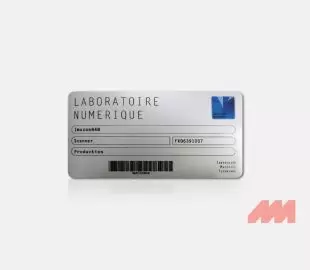
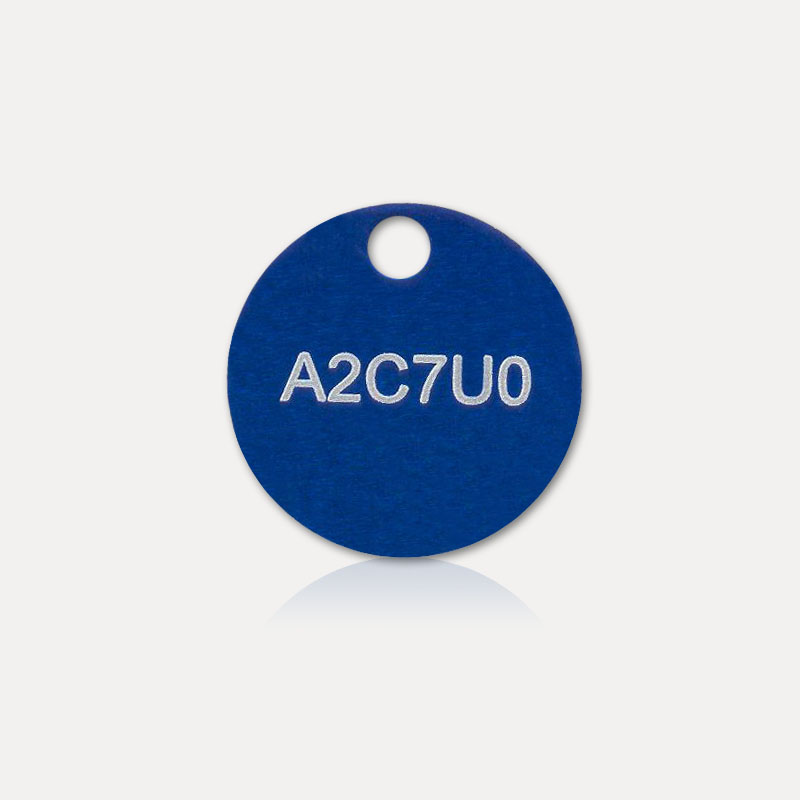
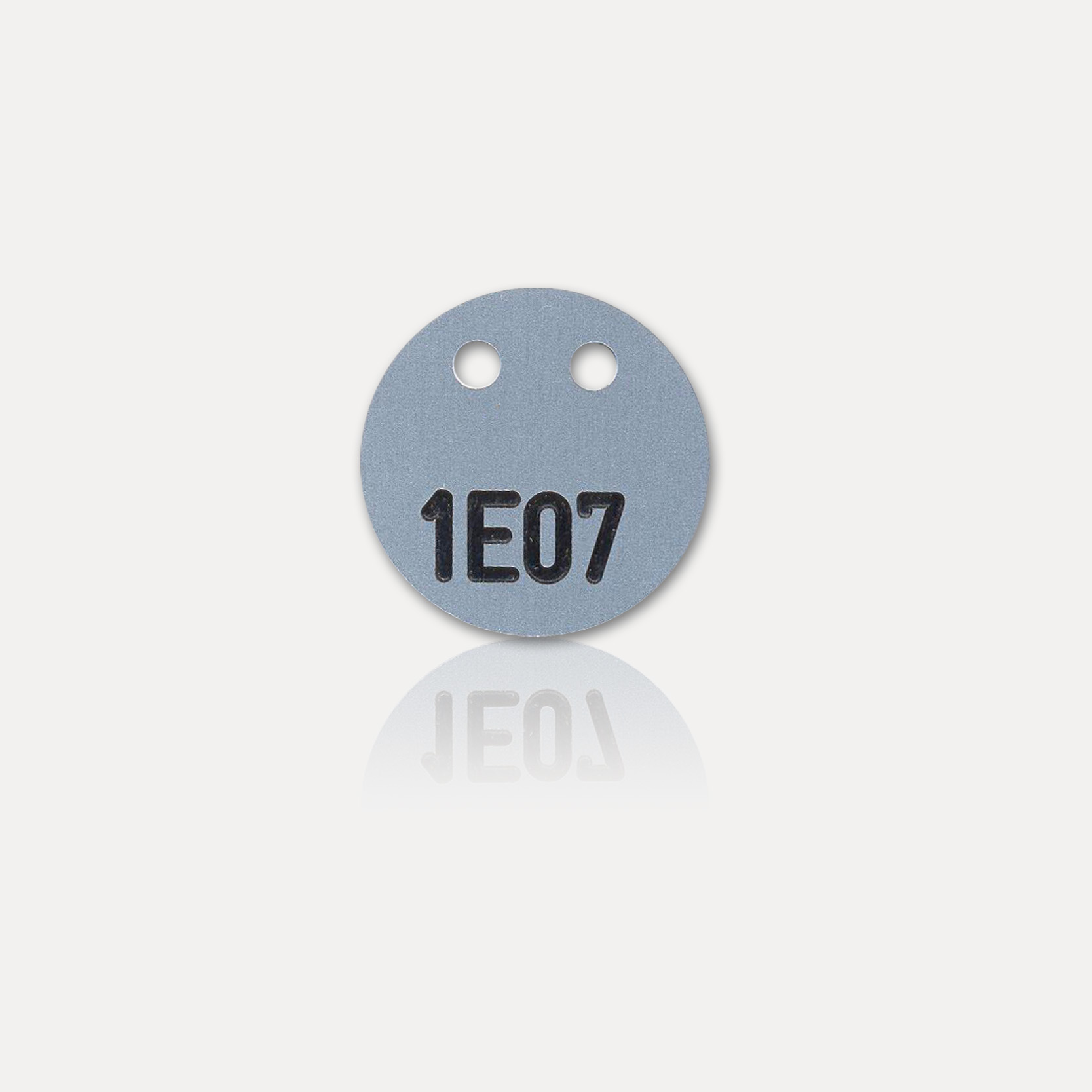
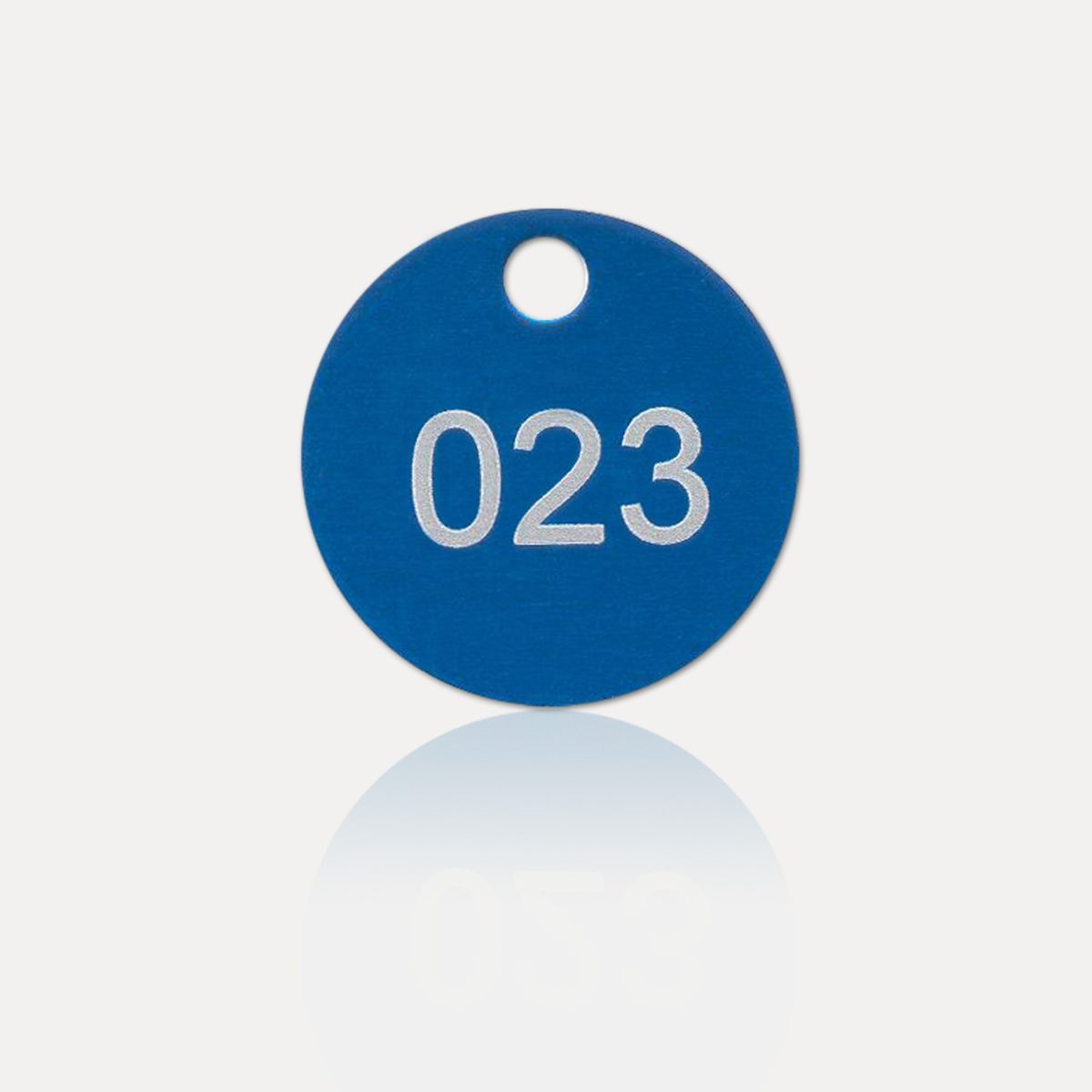
Identification and traceability
The choice of material determines the lifespan of your identification against the aggressions of your environment (chemicals, heat, electricity, etc.).
| Critical Criteria | 316L Stainless Steel (1.4404) | Anodized Aluminum | Bi-layer plastic (Acrylic/ABS) |
|---|---|---|---|
| Chemical Resistance |
Excellent (Except for HCl) Resistant to bases and acids, but vulnerable to concentrated hydrochloric acid. |
Average (pH Neutral) The colored layer is destroyed by strong acids and alkaline bases (industrial detergents). |
Variable (Sensitive to Solvents) Inert to water/humidity. Fragile to alcohols, acetone and hydrocarbon solvents. |
| Thermal resistance |
High (Integrity) Melting point ~1400°C. Readability retained after fire. (Mechanical loss > 600°C). |
Average (Integrity) / Low (Visual) Metal: withstands up to 600°C. Colour: Degrades from 250°C (loss of colour code). |
Low Softening and deformation occurs at temperatures between 80°C and 100°C. Unusable in hot areas. |
| Visual Identification |
Low (Monochrome) Grey on Grey or Black. No quick color coding. |
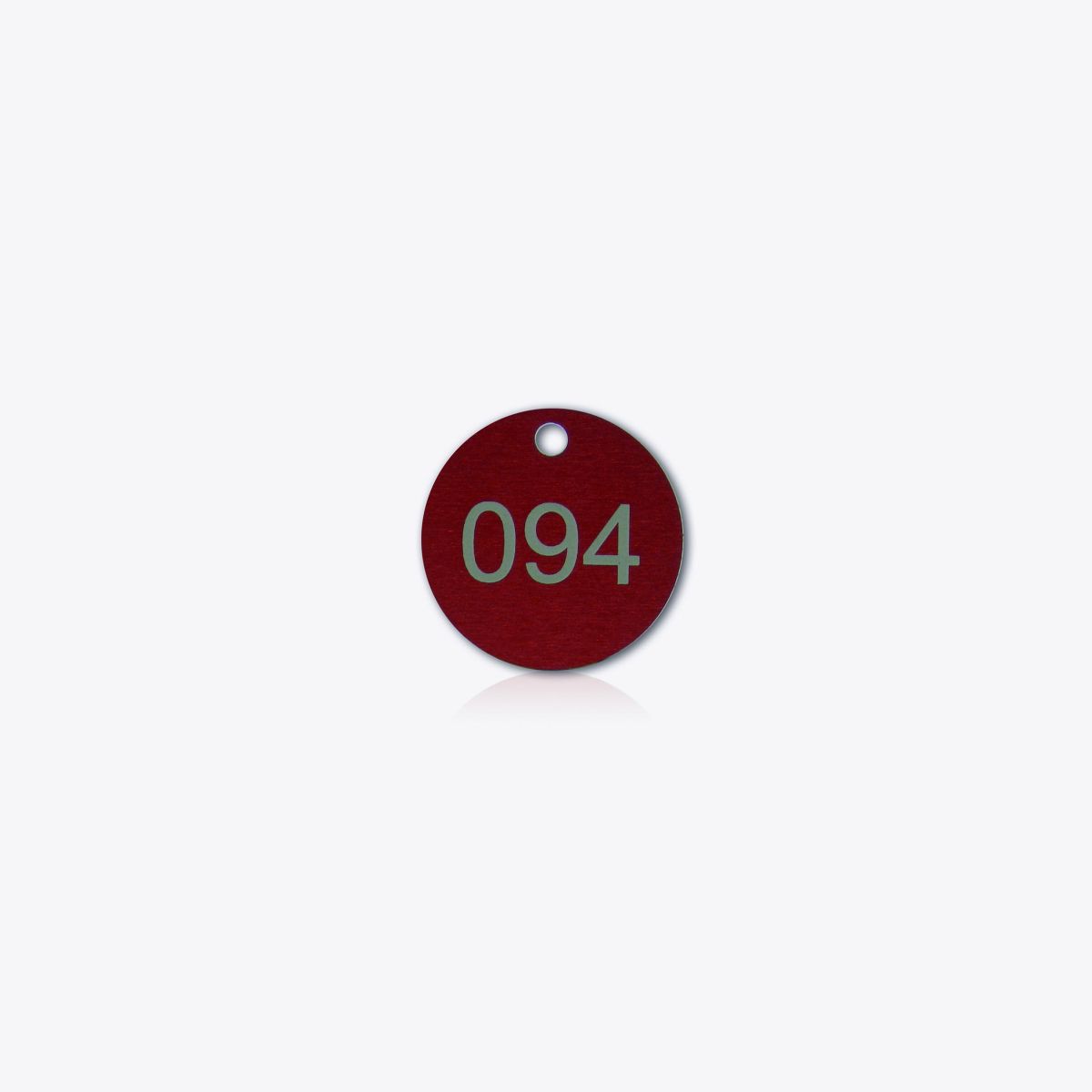
Excellent (Visual Management) Strong contrast + Standardized color code (Fluids). |
Very good Colour code available, but limited UV resistance (3-5 years) for some shades (Red/Yellow). |
| Electrical Conductivity |
Driver Risk of short circuit and electric arc. |
Surface insulator / Core conductor Insulating layer, but risk of contact via edges or scratches. Not recommended for high/low voltage applications. |
Insulator (Dielectric) Total safety. Non-conductive material throughout. |
| Mechanical Suit |
Extreme Resistant to shocks, vibrations and torsion. Does not break. |
Bonne Lightweight, but can bend or wear down from friction at the mounting hole. |
Average Breakable in case of violent impact or excessive tightening. |
Industrial applications and sector-specific use cases
We adapt the technology of our tokens and plaques to meet the critical requirements of your business.
Aeronautics: Critical tooling monitoring and FOD prevention
In aeronautics, the biggest fear is FOD (Foreign Object Debris). A poorly secured or deteriorating token becomes a potential projectile in a jet engine.
-
The solution Marquage Moderne :
We recommend identifying maintenance tools with Anodized Aluminium tokens with Laser or Micro-percussion engraving. -
Why?
The marking must remain legible even after years of intensive use (shocks, Skydrol hydraulic fluids). -
Conformity :
Our DataMatrix codes comply with the NF EN 9132 standard (Marking quality for aeronautical parts), guaranteeing Grade A/B readability essential for automated airside inventories.
Agri-food: Traceability and compliance with hygiene standards
The major challenge is the risk of bacterial contamination (Biofilm) and the presence of foreign bodies in the food chain.
-
The solution Marquage Moderne :
Exclusive use of 316L (1.4404) stainless steel with laser marking. Annealing. -
Why?
Unlike mechanical engraving which creates pits (breeding grounds for bacteria), laser annealing leaves the surface of stainless steel perfectly smooth and inert.
It withstands high-pressure cleaning cycles and chlorinated disinfectants without fading, whereas an adhesive label would eventually peel off and fall off during production.
Construction & Energy: Equipment identification in harsh outdoor conditions
On construction sites, offshore platforms or wind farms, equipment is subjected to: intense UV radiation, salt spray, abrasion (sand/mud) and mechanical shocks.
-
The solution Marquage Moderne :
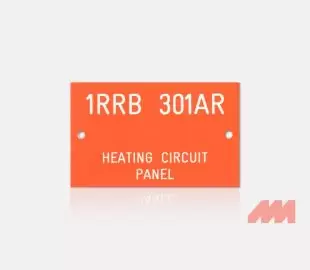
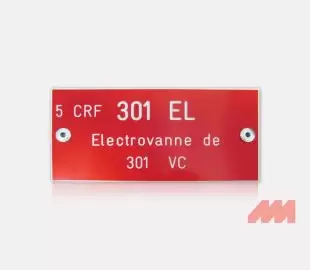
For high voltage valves and cables, we recommend Deep Mechanical Engraving on 316L Stainless Steel or Brass. -
The critical point (ATEX):
In explosive zones (Gas/Oil), the use of brass tokens is often required because it is a spark-free material, unlike steel which can cause a spark if dropped or impacted.
Logistics & Warehousing: Optimizing Flows and Automated Inventories
The challenge is no longer just to identify, but to connect the physical stock to the WMS (Warehouse Management System).
-
The solution Marquage Moderne :
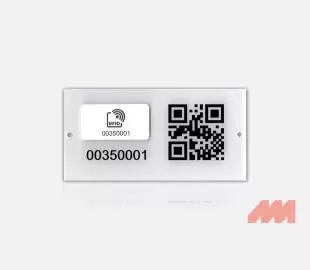
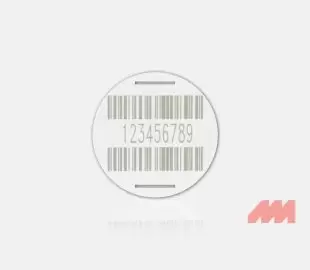
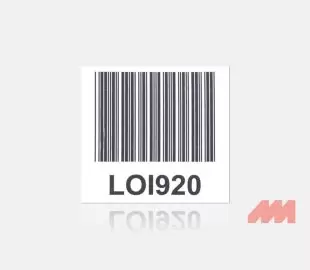
Tokens and rack plates with high-contrast sequential barcodes or QR codes. -
Why?
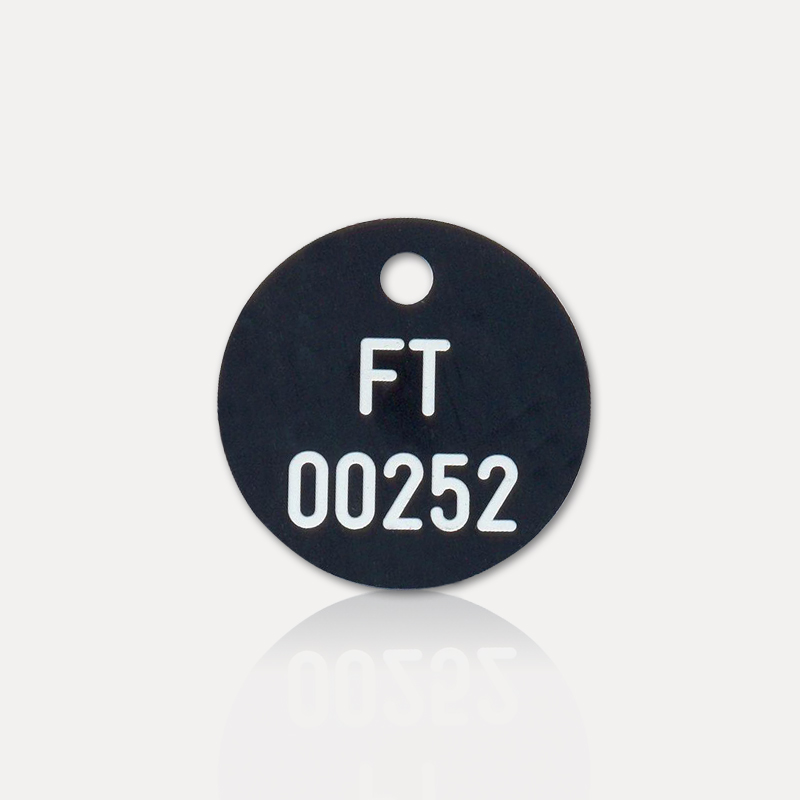
We use composite materials (Alu or Technical Plastic) laser engraved to obtain maximum “Black on White” or “White on Black” contrast.
This allows for increased reading distance for forklift scanners, reducing picking time and manual data entry errors.
Manufacturing Protocol: Our 3-Step Process
-
Audit & BAT:
Checking your Excel files (duplicates, sequences) and validating the Material/Technique pair according to your environment. -
Machining & Marking:
Precision engraving on robotic stations with database control to eliminate human error. -
ISO 9001 Quality Control:
Optical scanning of 2D codes and shipment sorted in sequential order to facilitate on-site installation.
Standard token or numbered token: which industrial marking solution should you choose?
| Criterion | Standard token | Numbered token (Variable Data) |
|---|---|---|
| Data type | Static (Fixed text / Logo). | Dynamic (Alphanumeric Increment). |
| QSE Purpose | Information & Signage. | Unit traceability & Asset management. |
| Risk management | Low (single model). | Criticism (Duplicates, sequence jumps). |
| Production Management | Standard vector file. | Automated feed via database. |
| Quality Control | Visual on sample. | Automatic proofreading (Scanner/Vision). |
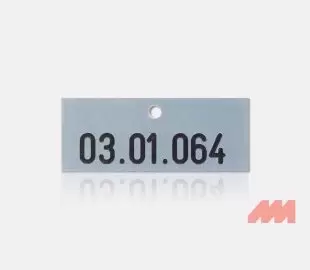
| Example | “FIRE VALVE” | “V-01-2026-A” or unique QR Code. |