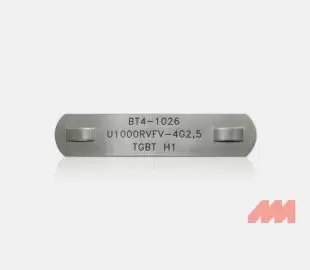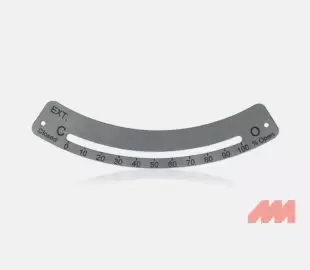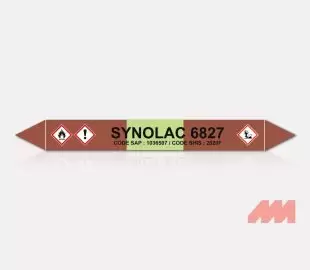






Selecting the best material/process combination to improve the resistance of your identification plates in harsh environments
| Environment & Constraints | Recommended Solution (Material + Technique) | Technical Justification (Atomic Proof) | ⚠️ Expert advice |
|---|---|---|---|
|
Severe Corrosion & Chemistry (Petrochemicals, Naval, Offshore) Exposure to chlorides, acids, salt spray. |
316L stainless steel (1.4404) + Chemical or Mechanical Etching |
The presence of molybdenum in 316L blocks pitting corrosion (ISO 9223). The material's depth of cut (0,1 to 0,3 mm) ensures legibility even in the event of surface attack. | Danger of “Laser Annealing”: Black laser surface marking (annealing) is a controlled oxidation process. In an acidic environment, this oxide layer becomes an entry point for rust (flash rust). Material removal is preferable. |
|
Extreme UV & Weather Protection (Construction, Rail, Outdoor) Direct solar radiation, thermal cycles. |
Anodized Aluminum + Mechanical Engraving |
The process physically removes the anodized layer to reveal the core of the aluminum. The complete absence of ink or pigment makes the marking impervious to UV photodegradation. | Print Obsolescence: Beware of digital printing solutions, even with UV-resistant lamination. They tend to yellow or peel after 3 to 5 years. Only mechanical engraving is durable for up to 20 years. |
|
High Temperatures (>300°C) (Aeronautics, Energy) Thermal stress, mechanical friction. |
Stainless Steel / Titanium + Fiber Laser Engraving |
The beam modifies the physicochemical structure of the metal without contact. The marking becomes an integral part of the material and withstands temperatures where no paint would adhere. | Structural Integrity: Unlike stamping marking (which deforms the material), fiber laser preserves the flatness of the part, essential for precision components or sealing. |
Regulatory compliance of your license plates
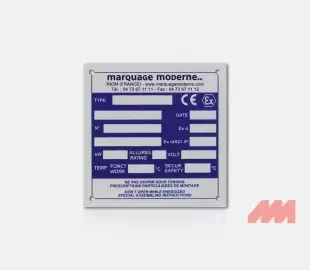
Each identification plate produced in our ISO 9001 certified workshops meets a strict regulatory framework:
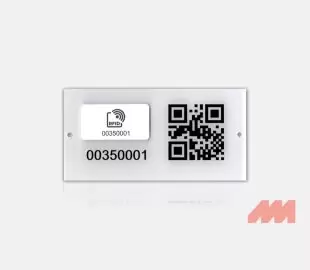
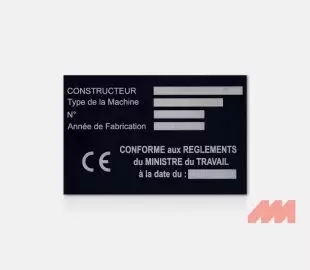
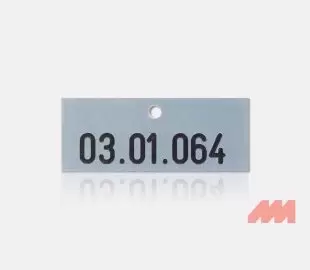
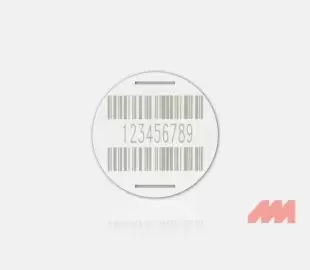
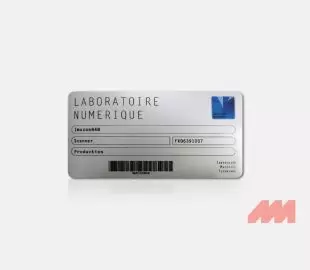
- Integration of mandatory information (mass, power, year) with rigorous management of serial number incrementation via your data files (Excel/CSV).
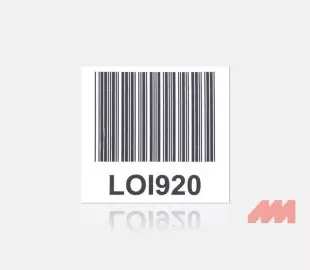
- Compliance with the NF EN 9132 standard for direct part marking (DPM), guaranteeing error-free rereading by industrial vision systems.
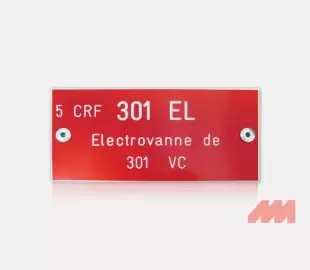
- We recommend riveting (pre-drilled holes with standard diameters) for an unremovable fixing, or the use of 3M™ VHB™ (Very High Bond) structural adhesives for surfaces where drilling is prohibited, offering a pull-out resistance of 25 kg/cm².
Supplier of identification plates since 1997
Our manufacturing process is designed to integrate your industrial constraints, with a tailor-made solution and production support aimed at ensuring the reliability of each step of the process.
- File Processing: Machining and engraving driven directly by your vector drawings (DXF/AI) for absolute geometric fidelity
- Variable Data Management: Complete automation of incrementing and QR codes via data merging (Excel). Result: 0% data entry error on large batches.
- Quality Assurance: Systematic verification of the quality class of the marking and dimensions before shipment.
- Technical Fixing: Delivery with integrated installation solutions – High performance adhesive (withstands -40°C/+120°C) or technical cutouts for clamps and rivets.