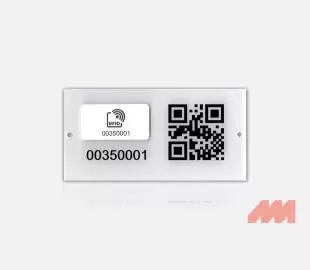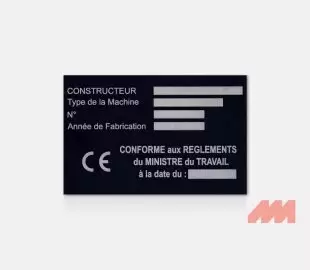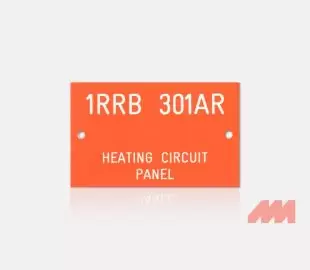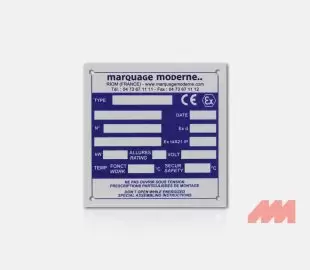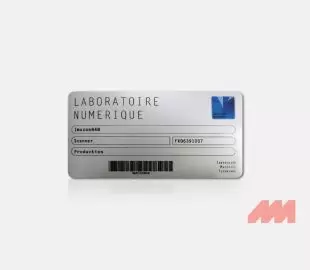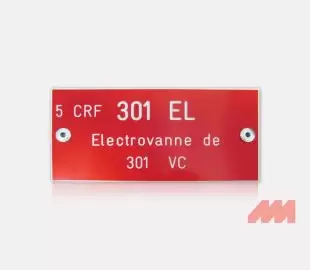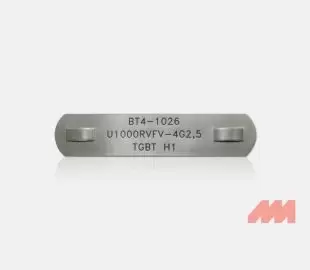


Custom and standard tare plates

Finding a reliable industrial supplier, capable of mass production or custom production with resistant materials (aluminium, stainless steel, PVC), is essential to guarantee the conformity of your fleet.
icon-custom-engraved-plates-standard
Take the time to rely on the best standards
→ See our products
fast-delivery-company-branding-icon

express order and delivery in less than 10 days

With over 400 cases processed each month, our teams ensure French manufacturing certified to ISO 9001 and perfect mastery of specific standards (notably NF EN 9132 for marking), in order to deliver compliant plates, with advanced personalization of dynamic variables.

Personalize your license plates

  • Technical catalogue: A wide choice of materials (Alu vs PVC) and fixing systems adapted to your supports.
  • Variable management: A proven ability to manage variables (PV, PTAC, L, l) via our configuration tools to secure your data.
  • Normative Reinforcement: We ensure the reminder of mandatory information for vehicles and lifting equipment to guarantee your compliance.

Compare the types of engravings

We have compared the three most commonly used engraving techniques to help you choose the one best suited to the use of the plates.

Technical Speed ​​& Productivity Process & Depth Key Benefits Resistance & Environment
Mechanical Engraving Mass production with an efficient manufacturing model ensuring rapid execution for industrial volumes. Intaglio marking by direct milling into the material, with a depth between 0,1 and 0,3 mm. Unalterable and robust, offering maximum physical resistance to shocks and scratches, ideal for physical durability. Extreme, resistant to harsh weather and severe conditions.
Laser Engraving Speed ​​and flexibility, ideal technique for dynamic variables (QR codes, incrementing) without tooling costs. Thermal beam enabling surface marking by ablation or in the mass by annealing on stainless steel. High precision for detailed and small-format markings. High-quality, with excellent resistance to external elements and to chemical or marine corrosion.
Chemical Etching Economical in volume, particularly suitable and profitable for medium and large production runs. Controlled acid attack with chemical etching between 0,1 and 0,2 mm. Refinement and aesthetics with a high-definition rendering allowing for the engraving of very fine details. Very high, indelible marking made within the material and UV resistant.

Choose your material according to your intended use.

The choice of material is crucial for the lifespan of the tare plate, depending on the environment of the vehicle or machine.

Material Ideal Use & Benefits Environment
Anodized Aluminum The standard, lightweight, aesthetic and scratch-resistant, perfectly suited for commercial vehicles. Exterior / Interior
Stainless Steel (304/316 Stainless Steel) The unalterable, recommended for corrosive environments such as tanker trucks, seaside and chemical industry. Aggressive environments / Salt flats
Bi-layer plastic (Gravoply) An economical, UV-resistant solution ideal for curved surfaces thanks to the use of powerful industrial adhesives. Exterior / Interior

Request Quote

Application areas :

  • Road transport and commercial vehicles
  • Heavy goods vehicles, trailers and semi-trailers
  • Logistics, handling and forklifts
  • Construction and earthmoving equipment
  • Mobile industrial vehicles and on-board equipment
  • Railway industry and rolling stock
  • Mechanical equipment, platforms and skips
  • Industrial bodywork and vehicle outfitting

Examples of tare plates:

  • Utility vehicle tare plate
  • Truck or heavy goods vehicle tare plate
  • Trailer or semi-trailer tare weight plate
  • Forklift tare plate
  • Tare plate for mobile industrial equipment
  • Regulatory tare plate with loads and GVWR

Examples of achievements

FAQ

How do you manage the production of a series of tare plates with different weights (PV, PTAC) for each vehicle?

We ensure automated processing of variable data (increment, Excel files), which eliminates the risk of error on productions of 1,000 pieces or more.

Does the engraving withstand high-pressure washing and chemicals (car body cleaning)?

Yes. Mechanical engraving provides a deep and permanent marking at the heart of the material, ensuring maximum physical resistance to shocks, scratches and aggressive cleaning agents.

Is it possible to fix tare plates permanently without drilling into the bodywork?

While we recommend riveting (with pre-drilling to standard diameters) for a durable fixing, we use high-performance structural industrial adhesives (such as 3M VHB) for certain surfaces. These adhesives are certified by the automotive industry and are resistant to vibration, heat, and climatic variations.

What information is mandatory?

To be compliant, your tare plates must generally display the following information:

PV (Unladen Weight):
The weight of the vehicle without load or driver, but with full tanks.

GVWR (Gross Vehicle Weight Rating):
The absolute limit that must never be exceeded (vehicle + passengers + goods).

PTRA (Total Authorized Towing Weight):
The maximum weight of the whole assembly if you add a trailer (Towing vehicle + Trailer + Loads).

lx L (Width x Length):
Overall dimensions (often requested for trailers or trucks).

S (Surface):
Floor area (in m²).

→ Request for a quote for a tare weight plate

Custom-made tare plates for heavy goods vehicles and commercial vehicles

A tare plate is not a simple accessory: it is a regulatory support that secures the operation of your vehicles and the compliance of your fleet.
On a heavy goods vehicle, a converted utility vehicle or a trailer, it allows for the clear identification of mass and load information expected during checks, audits or maintenance operations.

A durable, legible, compliant license plate

On the road, a tare plate is subjected to real stresses: projections, vibrations, temperature variations, high-pressure washing, bodywork cleaning products, saline or industrial environments.
Customization therefore consists of choosing the right combination of material and marking, in order to guarantee lasting legibility and an unalterable marking.

Depending on your use, we manufacture tare plates in anodized aluminum, stainless steel (including 316L stainless steel for aggressive environments) or bi-layer plastic.
Laser engraving is ideal for precision and repeatability, especially when you need to incorporate internal references, 2D codes, or fleet identifiers.
Mechanical engraving, in intaglio, provides maximum resistance to shocks and friction.

Serial Variable Data Management

Professional fleets often require different information for each vehicle.
We ensure automated processing of variable data (incrementing, Excel files), in order to produce consistent and error-free batches of plates, even beyond 1,000 pieces.
This production flow secures the sequence of numbers, the accuracy of values ​​and traceability, while reducing delays.

Common markings on a tare weight plate

The specific details vary depending on the requirements, but a tare plate should generally display information such as:

  • Unladen weight (PV): the weight of the vehicle without a load, with full tanks.
  • GVWR (Gross Vehicle Weight Rating): the absolute limit not to be exceeded
  • PTRA (Total Authorized Towing Weight): the maximum weight of the vehicle and trailer combination
  • W x L (Width x Length): overall dimensions, often requested on trailers

Terrain-appropriate fixings

For a durable fixing, riveting remains the most recommended solution, with pre-drilling to standard diameters.
Depending on the substrate, structural industrial adhesives (such as 3M VHB) can also be used, particularly when you want to avoid drilling into the bodywork, while maintaining high resistance to vibrations and climatic variations.

A well-designed custom tare plate protects your business: it reduces the risk of non-compliance, improves vehicle identification, and ensures legible information over the long term, even in severe conditions.

Supplier of tare plates with variable data (PV, PTAC, PTRA)

The manufacture of tare plates with variable data addresses a central issue for transport and industry professionals: ensuring accurate, legible and compliant information for each vehicle.
When the values ​​of PV, PTAC or PTRA differ from one vehicle to another, the use of a supplier capable of managing these variations on an industrial scale becomes essential.

Secure management of regulatory data from your tare plates

Tare plates incorporate critical information related to safety and compliance.
An error in value or an inconsistency between vehicles can lead to refusals during checks, immobilizations or obligations to bring into compliance.
A specialist supplier sets up automated processes to integrate variable data from Excel files or ERP extracts, while maintaining perfect control of sequences and formats.

This automation eliminates the risk of human error and guarantees total consistency, including for large series exceeding several hundred or thousands of plates.

Industrial production and traceability

Variable data management is not limited to printing or engraving.
Each tare plate must be associated with the correct vehicle, the correct number and the correct load values.
An experienced supplier ensures systematic checks before and after production, guaranteeing complete traceability of each batch.

Laser engraving is particularly well-suited to this type of production, thanks to its precision and repeatability.
Mechanical engraving can also be used when physical strength and marking depth are priorities.

Plates adapted to all environments

Tare plates with variable data are designed to withstand real-world field stresses.
Anodized aluminum, stainless steel or bi-layer plastic are selected according to the environment of use, cleaning constraints and expected lifespan.
The objective is to maintain perfect readability of PV, PTAC and PTRA data over the long term.

Choosing a supplier of tare plates with variable data management means securing your production, ensuring your regulatory compliance and saving time across your entire industrial chain.

Time-readable tare plates: choice of marking techniques

Time-readable tare plates: choice of marking techniques

The readability of a tare plate over time is a major issue for professionals in transport, logistics and industry.
Subjected to mechanical, climatic and chemical stresses, a tare plate must retain perfectly legible information throughout the vehicle's life, in order to guarantee compliance during checks and operational safety.

Why the marking technique is crucial

A tare plate can lose its readability for several reasons: abrasion, shocks, UV, high-pressure washing, cleaning solvents or corrosion.
Simple support is not enough.
The combination of material and marking technique determines the actual durability of the PV, PTAC and PTRA markings.

Inappropriate markings can fade, deteriorate or become illegible, leading to obligations for early replacement, or even regulatory non-compliance.

Mechanical engraving: the benchmark in durability

Mechanical engraving involves directly carving into the material.
This technique offers maximum resistance to friction, shocks and external aggressions.
Even if the surface is worn, the information remains legible because it is written in depth.

Mechanical engraving is particularly recommended for tare plates exposed to severe conditions, such as heavy goods vehicles, trailers, construction equipment or vehicles subject to frequent cleaning.
It represents the most robust solution to guarantee readability over the very long term.

Laser engraving: precision and visual stability

Laser engraving allows for contactless, extremely precise and consistent marking.
On anodized aluminum, the laser removes the anodizing layer to create a sharp and lasting contrast.
On stainless steel, annealing marking generates a dark contrast that is resistant to UV and corrosion.

This technique is ideal when the tare plate incorporates variable data, internal references, or 2D codes.
It ensures excellent repeatability, essential for mass production, while maintaining long-term readability.

Choose the right technique according to the environment

The choice of marking technique depends directly on the environment of use.
For standard or controlled outdoor use, laser engraving on anodized aluminum offers an excellent compromise between legibility, precision and speed of production.
For aggressive or highly mechanically stressed environments, mechanical engraving remains the safest solution.

A tare plate that remains legible over time is the result of a carefully controlled technical choice.
By selecting the marking technique adapted to your actual constraints, you ensure the long-term compliance of your vehicles and limit replacement interventions in the long term.

Marquage Moderne, a specialist in industrial and advertising marking, has been producing personalized plates and labels for professionals to meet their marking needs for communication, identification or regulations for over 20 years.