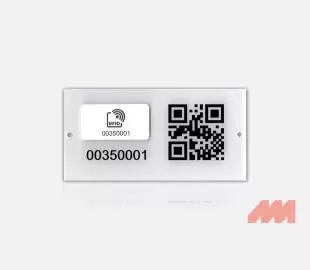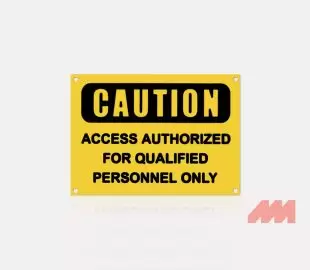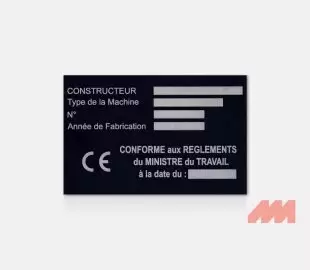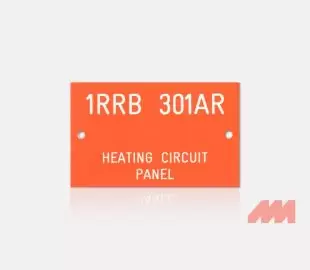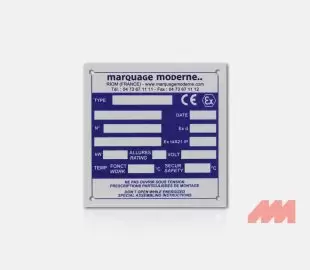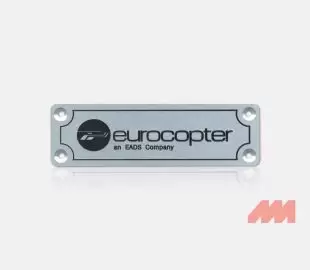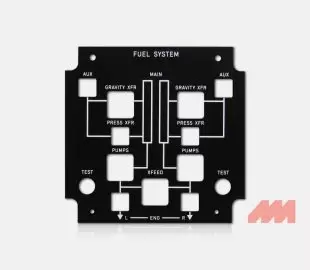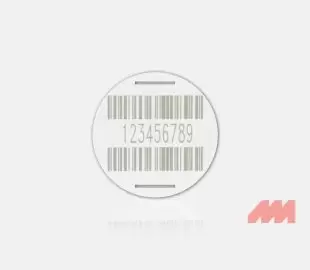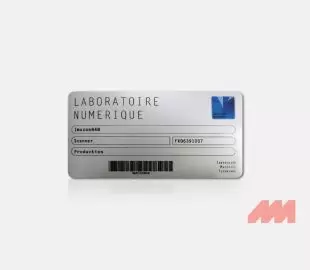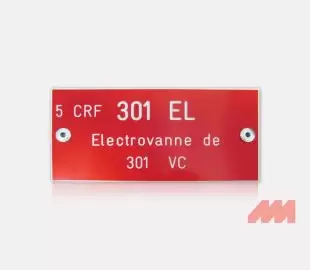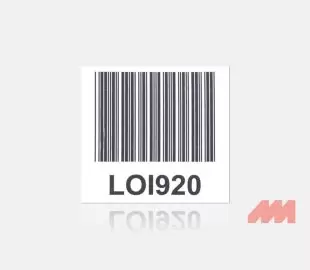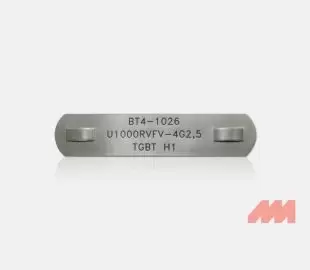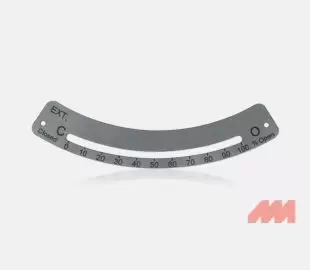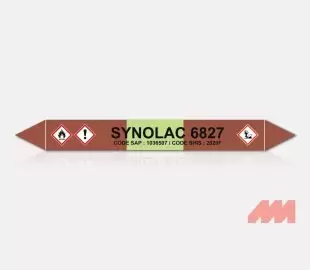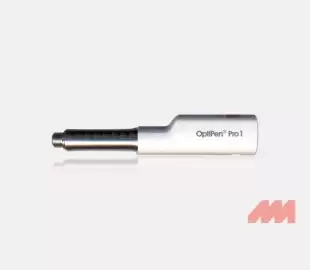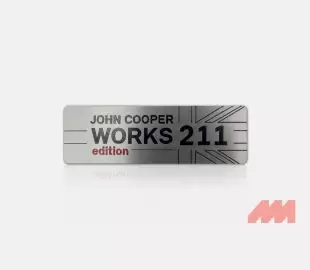



Since 1997, we have been manufacturing nameplates on an industrial scale, mastering strict requirements for quality, durability and compliance.
Our processes guarantee dimensional and chromatic stability, high resistance to UV, corrosion, chemical agents, and sealing suitable for industrial and outdoor environments.
The selected materials (anodized aluminum, stainless steel, technical plastics) are designed to withstand the most severe environments: prolonged outdoor exposure, thermal variations, humidity, projections and mechanical stresses.
Thanks to controlled engraving and marking processes, we ensure that the marking is permanent, legible, and has a lifespan that meets industrial and regulatory requirements.
Comparing materials: which one to choose depending on your environment?
| Criteria | Stainless steel (304/316) | Aluminium (Anodized) | PVC / Plastics |
|---|---|---|---|
| UV resistance | Excellent: Unalterable, does not tarnish over time | Excellent: High resistance, especially anodized aluminum | Moderate: Risk of yellowing; inks may fade in 5-7 years. |
| Solvents & Chemistry | Maximum: 316 stainless steel is recommended for harsh and chemical environments. | Very good: Resists splashes and industrial cleaning well. | Variable: Sensitive to certain solvents and corrosive agents. |
| Scratches & Dents | Excellent: Very hard material, maximum physical protection. | Good: The 6061 alloy offers good structural strength. | Low: Sensitive to abrasion and mechanical friction. |
| Temperature | Optimal: Withstands extreme cycles (cryogenics or high temperature). | Very good: Alloy 5083 is preferred for thermal shock resistance. | Limited: Does not withstand high temperatures (risk of deformation). |
Industrial production of durable outdoor nameplates
Step 1: Data ingestion with direct processing of your raw files (.CSV, .XLS) without manual re-entry (source of human error eliminated).
- Software incrementation: Algorithmic generation of barcodes and QR codes.
- Vision control: Optical verification of readability (Grade A/B according to ISO 15415) at machine output, essential for machine reading.
Step 2: Engraving your plates: Using techniques that modify the very structure of the material (fiber laser, mechanical or chemical engraving) to guarantee a permanent marking.
Step 3: Quality control based on ISO 9001 (or EN 9100 depending on the sector) and code reading (NF EN 9132) to ensure a perfect link with your ERP or UID systems.
Our engravings adhere to strict industry standards.
All our mass-produced plates, whether in metal or plastic, are designed to guarantee compliance with traceability requirements (DataMatrix, NF EN 9132) and certification requirements (ISO 9001, CE marking).
Variable data handling and serial incrementing
We industrialize variable data to transform your databases into physical markers and drastically reduce serial errors:
- Sequential incrementation: Automation from your source files (Excel/CSV) ensures that there are no duplicates, even on large series of several thousand units.
- 2D Encoding: Generation of DataMatrix (ECC200) or QR Codes containing up to 200 characters (URL maintenance, PDF datasheet).
- UID traceability: Each plate becomes a unique node identified in your ERP.
Permanent outdoor fixing solutions
To maximize the durability of your plates, the choice of fixing solution is essential.
External conditions add complexity and constraints not encountered in an indoor environment.
The plate must not fall or be torn off, regardless of the weather or season.
We therefore recommend mechanical fixing by drilling or riveting, and avoiding cheap adhesives, except for industrial structural adhesives (type 3M VHB) suitable for difficult surfaces.
We can pre-drill the fixing holes to standard diameters: 2mm, 3.2mm, etc.