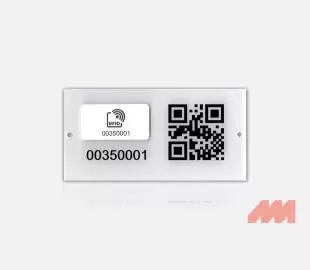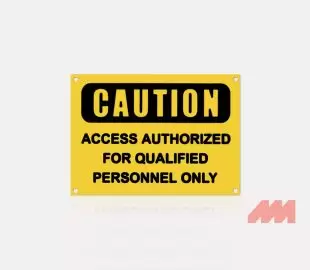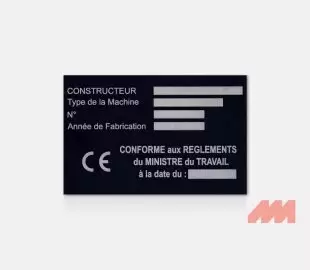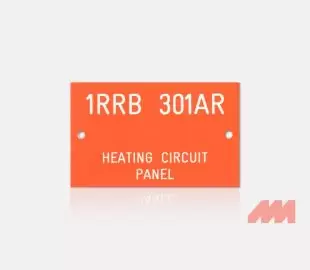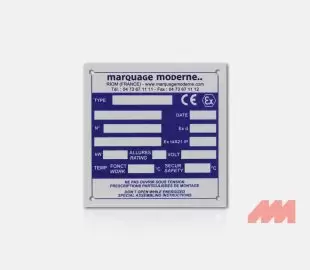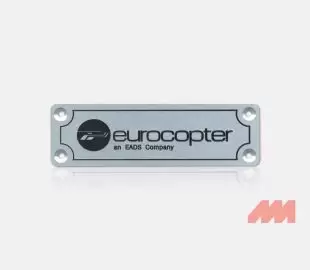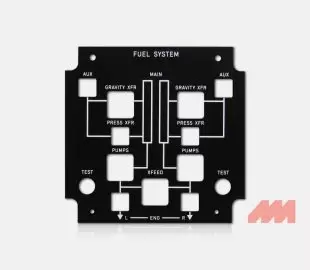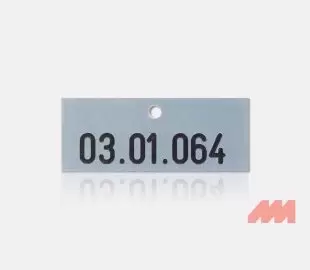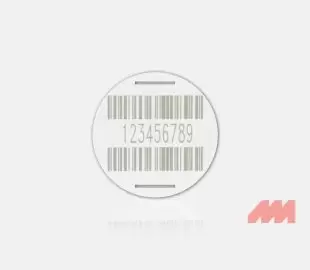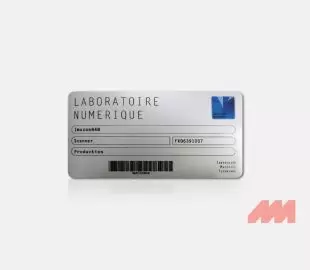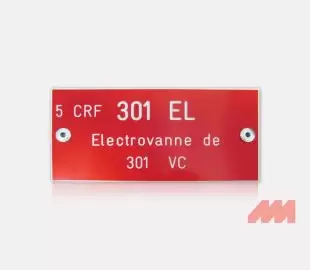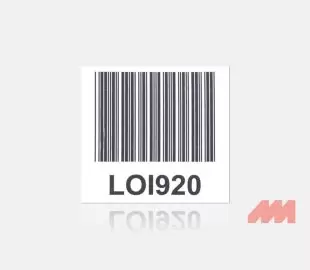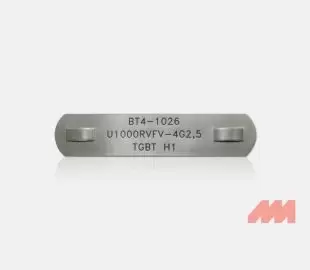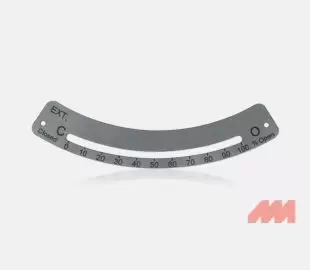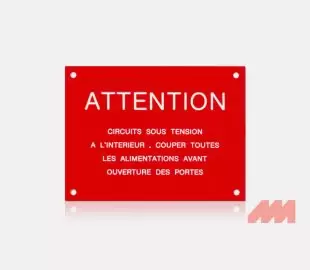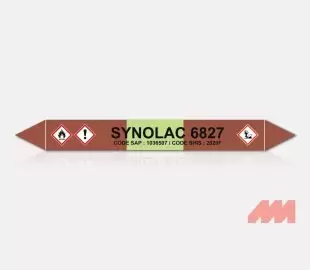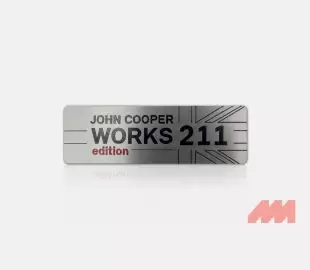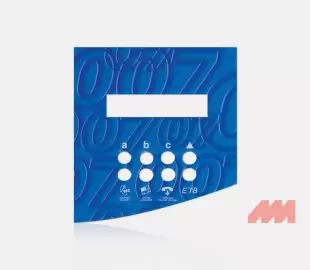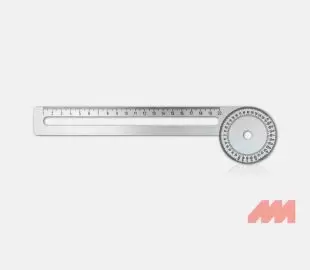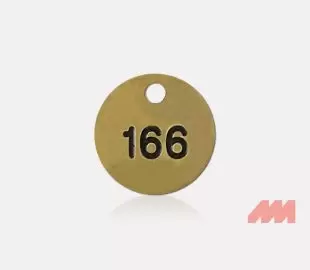



We produce your electrical cabinet and TGBT markings identically over several years, without any drift in readability, dimensions or dielectric properties.
Professional marking solutions for the electrical industry
ISO 9001 certified, Marquage Moderne Industrialize your serial marking processes with a “Zero Defect” approach:
-
Data engineering (zero error):
Our CAM software packages directly integrate your CAD/CAM drawings (Excel, CSV files). This automation eliminates manual data entry and ensures strict alignment with your bill of materials. -
Optimizing wiring time:
We deliver your pre-adhesive, weeded, and sorted markers on matrix sheets. The arrangement follows the chronological order of your workshop assembly. -
Fixing Expertise (The LSE Challenge):
The powder coatings on the enclosures create a low-energy surface. A standard acrylic adhesive will not cure properly on these textured coatings. To guarantee a lifetime installation without drilling (maintaining the IP rating), we require the use of 3M 300LSE structural adhesive or VHB foam. -
Compliance with harsh environments:
If the cabinet has local hot spots (>85°C), we machine UL94-V0 technical polycarbonate. For confined environments (nuclear, railway), we use LSZH (Halogen-Free) polymers compliant with IEC 60754, which prohibit the release of toxic gases in a fire.
Comparison of engraving technologies
| Technology & Process | Recommended Material | Application (Main switchboard / Automation) | Physical Advantage (Atomic Proof) | Operational Limit (Expert's Eye) |
|---|---|---|---|---|
| Laser Ablation (CO2) | Bi-layer plastic (Acrylic / ABS) | Internal labeling (terminal blocks, contactors, pushbuttons) | The engraved acrylic [Subject] retains [Relationship] total dielectric insulation preventing any electric arc in a Low Voltage environment [Proof]. | Unstabilized outdoor PMMA exhibits a photodegradation phenomenon (breakage of polymer chains) leading to chalking after 3 to 5 years in full southern exposure. |
| Mechanical Engraving (CNC) | Anodized Aluminum | External manufacturer's plate (CE marking, voltage, power) | The milling cutter machines the material to a depth of 0,3 mm. This depth [Subject] guarantees [Relationship] a tactile readability unaffected by industrial solvents [Proof]. | Mechanical engraving does not allow sufficient resolution for modules smaller than 0,4 mm required for DataMatrix codes conforming to the NF EN 9132 standard (aeronautical traceability). |
| Fiber Laser Engraving | 316L stainless steel (1.4404) | Enclosures for critical environments (ATEX, Offshore, Nuclear) | 316L (1.4404) stainless steel [Subject] resists [Relationship] salt corrosion according to ISO 9227 due to its molybdenum content (2–2,5%) [Proof]. The laser modifies the surface without altering this intrinsic resistance. | The laser marking “annealed” (black) alters the protective chromium oxide layer. Without repassivation (nitric or citric acid according to ASTM A967), the area becomes a point of initiation for crevice corrosion in a saline atmosphere. |
Choose the right material according to your environment
| Application Environment | Recommended Material | Physical Advantage (Atomic Proof) | Industrial Justification & Safety |
|---|---|---|---|
| Inside the cabinet (terminal blocks, contactors, relays) | Bi-layer plastic (PMMA / ABS) | PMMA [Subject] exhibits [Relationship] a typical dielectric strength of 20 to 30 kV/mm according to manufacturer datasheets [Proof]. | Laser ablation eliminates the need for conductive ink. It guarantees complete insulation in low-voltage environments (≤ 1000 V) and eliminates the risk of electric arcing. |
| Exterior of the case (Manufacturer's plate CE marking) | Anodized Aluminum | Anodic alumina (Al₂O₃) [Subject] forms [Relationship] a hard layer (≈ 200–400 HV) preventing atmospheric corrosion [Evidence]. | Natural passivation blocks oxidation. Good resistance to common industrial solvents (isopropyl alcohol, mild degreasers) during maintenance. |
| Confined environments (Rail, Nuclear) | LSZH (Halogen-Free) Engineering Plastic | The LSZH polymer [Subject] strongly reduces [Relationship] acid gas (HCl) emissions on fire according to IEC 60754 [Evidence]. | Protects sensitive electronics and personnel. (Note: Requires material validation by certificate to meet EN 45545-2 standard). |
| Extreme environments (Offshore, Heavy chemicals) | 316L stainless steel (1.4404) | The molybdenum content (2–2,5%) [Subject] improves [Relationship] resistance to pitting corrosion in chlorinated media according to ISO 9227 [Evidence]. | Fiber laser marking. The only viable option to guarantee permanent traceability under salt spray or severe chemical exposure. |